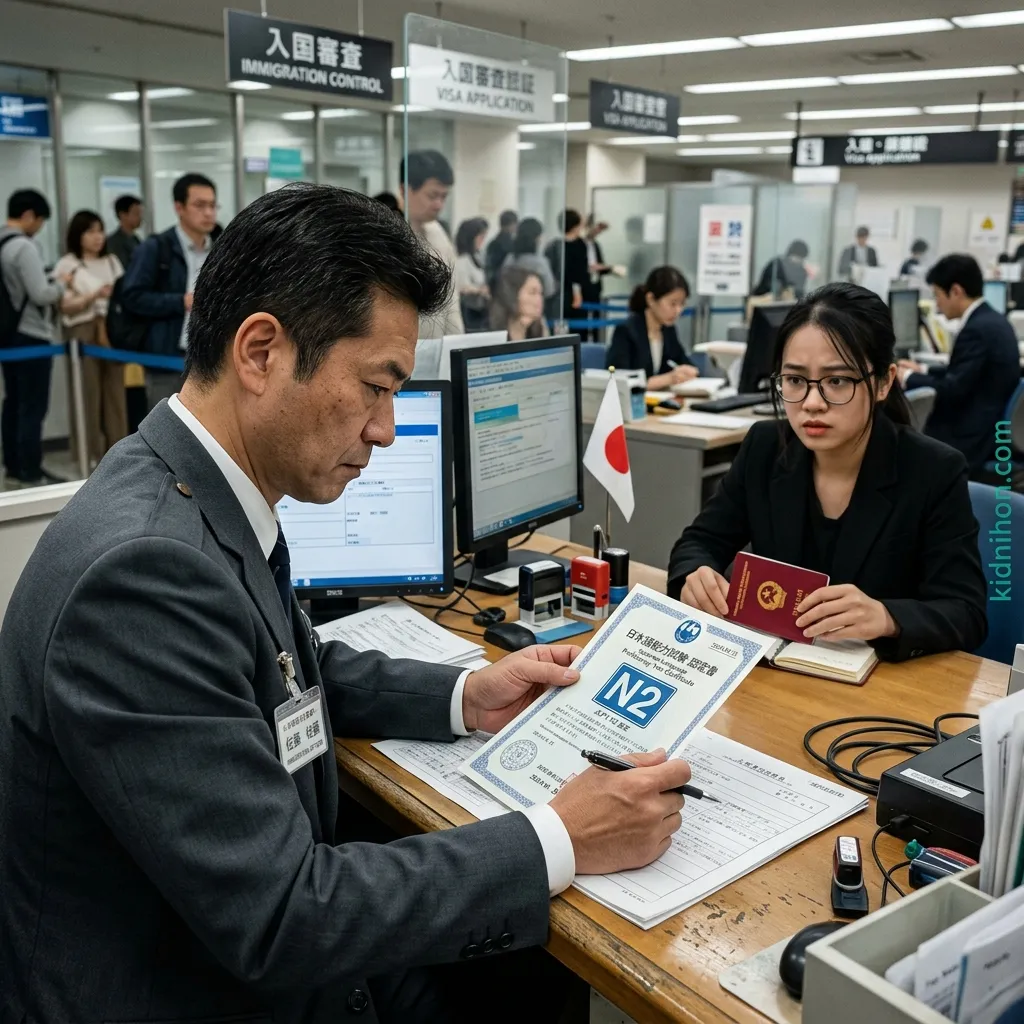
Recently, foreign communities in Japan and those preparing to work in Japan as engineers have been unsettled by rumors: "From mid-April 2026, applying for the Engineer Visa strictly requires a JLPT N2 certificate." Many questions arose: Is this an unfounded rumor or a new policy by the Immigration Services Agency of Japan (Nyukan)? Will I fail without N2? What if I'm already working in Japan and changing jobs?
Do not panic! Understanding the law ensures you maintain your legal status and helps you avoid scams. In this article, KidNihon's legal consulting team breaks down the latest regulations from Nyukan, clarifying who is directly affected, who is exempt, and how to safely prepare your application in 2026.
📰 Official Sources: This article is researched and compiled based on the official guidelines directly from the Immigration Services Agency of Japan (MOJ), cross-referenced with major reputable news outlets including Kyodo News and NHK News.
1. OFFICIAL: N2 Requirement Starting April 15, 2026
Effective April 15, 2026, Nyukan officially enforces a major change regarding 提出資料 (Teishutsu shiryō - Mandatory Submission Documents) for issuing or renewing the Engineer Visa.
The change specifically targets Japanese communication abilities for service and office jobs where the Japanese language is a primary work tool.
The rule states: If you apply for a position where the job demands regular use of Japanese (e.g., Interpreter, Translator, Customer Support, International Business, General Affairs), you are strictly required to submit documents proving Japanese proficiency of CEFR B2 or higher.
(CEFR B2 equates to the JLPT N2 exam, 400 points in BJT, or equivalent certificates).
Most Affected Groups (N2 is Mandatory):
- Overseas Applicants: Especially those submitting new Certificates of Eligibility from abroad to join a Japanese company in the humanities/business sector.
- Applying to Category 3 or 4 Companies: These are small, newly established companies within their first year, without submitted tax reports, or with very low tax records. Immigration heavily scrutinizes their capability.
- Job Description is Translation / Humanities: If your contract expressly lists translation or general affairs as your duty.
2. Background: What is the Visa 技人国 (Gijinkoku)? Why Tighten It?
Vocabulary to Know:
- 在留資格 (Zairyū shikaku): Status of Residence (Visa).
- 技術・人文知識・国際業務 (Gijutsu - Jinbun chishiki - Kokusai gyōmu): Engineer/Specialist in Humanities/International Services (Often abbreviated as Engineer Visa / Gijinkoku / 技人国).
- 入国管理局 (Nyūkoku kanri-kyoku) / 入管 (Nyūkan): Immigration Services Agency.
The Engineer Visa has always been a prestigious visa aimed at highly educated professionals. However, in recent years, taking advantage of labor shortages, many brokers illegally used the Engineer Visa to import foreigners for menial labor (factory lines, carrying heavy loads), which actually falls under Technical Intern or Tokutei Gino visas.
This distortion forced Nyukan to tighten the screening. One of their most powerful tools is the rigorous check on language proficiency relative to the job description, leading to the stringent N2 audit discussed above.
3. Checklist: Who Needs N2 and Who Doesn't?
For the utmost clarity regarding the 2026 regulations, please check the following grid:
| Applying Condition | Category 1, 2 Co. (Large, High Tax) | Category 3, 4 Co. (SME, New) | 2026 Notes & Tips |
|---|---|---|---|
| IT, Tech Jobs (English/Programming Only) | NO N2 REQUIRED | NO N2 REQUIRED | HR needs to submit a logically sound explanation detailing why the role excludes Japanese. |
| Graduates of JAPANESE Universities/Vocational Schools | N2 IS EXEMPTED | N2 IS EXEMPTED | Students switching visas locally (Shushoku) are considered low-risk. |
| Overseas Applicants / Translating & Admin Roles | Lenient but recommended | N2 MANDATORY (CEFR B2) | From April 15, 2026, lacking this certificate translates to an almost 99% rejection rate for COE screening. |
4. Common Causes for Visa Rejection (Despite a Degree) & Fixes
Even if you fall under the "No N2 Required" column, your visa might still be declined if you fall into these traps:
- Trap 1: Degree and Job Duties Do Not Match (専攻と職務内容の不一致). You studied Agriculture or Mechanical Engineering, but your contract is for "B2B Sales Agent." Nyukan will trash your application as your expertise does not match. Fix: Ensure your Explanation Letter (理由書) correlates 100% with your university transcripts.
- Trap 2: Submitting Fake Japanese Certificates. Never trust shady agencies offering "pay for an N2 diploma." Nyukan has direct lines to verify JLPT Serial Numbers on the association's database. Submitting forged documents results in blacklisting and an entry ban.
- Trap 3: Target Company Lacks Sponsorship Capacity. Companies operating at a heavy loss, purely virtual offices, or tax evaders. Applying to these entities guarantees a visa rejection.
(Note: We highly recommend following legal pathways and naturally improving your Japanese to meet office standards rather than forging documents, which is a severe legal offense).
5. Frequently Asked Questions (FAQ)
1. I only have JLPT N3 right now. Can I apply for the Visa in April 2026?
Answer: If your core background is Engineering (IT, Electrical, Mechanical) and you are applying to a Category 2 company, N3 is more than enough for a successful sprint. However, if you apply for a "Language / Translator" role at a small firm (Cat 3/4), hold off on applying and attempt to clear the N2 in the upcoming July or December exams first.
2. I am already working in Japan on an Engineer Visa. If I switch companies, does this N2 rule apply?
Answer: This strict regulation primarily enforces the "Entry" phase (Applying for a brand new COE). Those already holding a 技人国 visa usually face an easier extension/switch process. But if you completely change industries or drop to a weaker Category company, immigration officers reserve the right to request additional proof. Keep improving your Japanese.
3. Does this affect overseas applicants who never studied in Japan applying for a COE?
Answer: Yes. Because you fall under "Sponsored from abroad" and have no institutional credits in Japan, the N2 restriction for translation/admin jobs will be strictly enforced on your application.
Related Articles
We hope this article clarifies the legal landscape of the latest 2026 Japan Immigration adjustments. To master all Japanese visa procedures, check out these invaluable resources:
- Japan Visa Update 2026: Rising Fees, Stricter PR Rules & New Departure Tax
- Complete Guide to Japan Visa Types 2026: Work, HSP, Student, Spouse & Tourist Visas
- Japan HSP Visa 2026: Detailed Points Table and Fast-Track PR in 1-3 Years
- 2026 Warning: PR Application Fee Cap to Increase to 300,000 JPY
✍️ This article was researched, verified against legal regulations, and compiled by the Legal Consulting & Review Team at KidNihon. For precise advice regarding your Visa application, please leave a comment below!
Key Takeaways
Always update the latest information from official sources.
Join the community for support when needed.