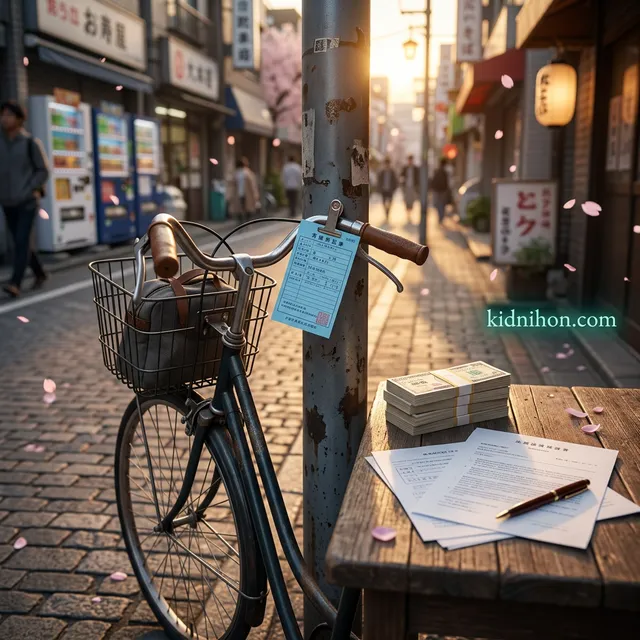
Starting April 1, 2026, Japan officially steps into its new fiscal year (Nendo 2026). While previous years heavily focused on broad economic policies, this year introduces extremely strict regulations that target the very core of your everyday daily routines. Chief among them is the massive structural overhaul of road traffic laws applied to bicycles.
If you are an intern, an IT engineer, or an international student residing in Japan, failing to grasp these new legal protocols can subject you to devastating administrative fines or seriously jeopardize your visa renewal status.
Let’s thoroughly analyze the 5 most critical transformations arriving in 2026 from an expert legal perspective.
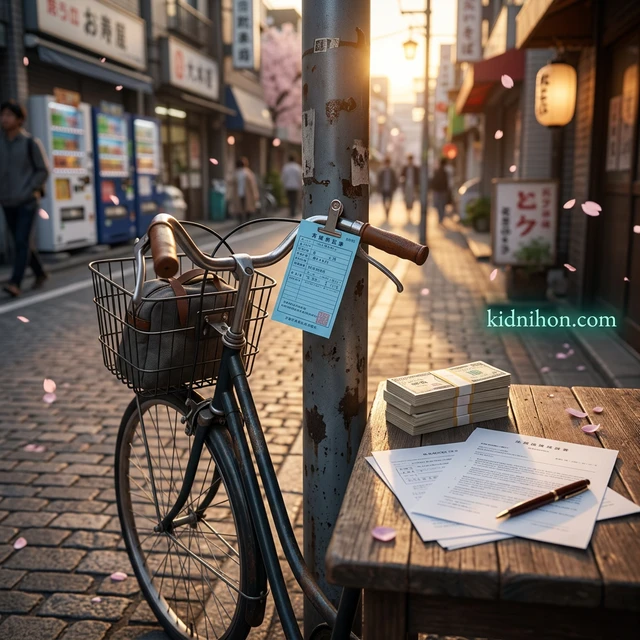
1. Massive Expansion of Traffic Laws: Blue Tickets for Bicycles
Historically, bicycles (自転車 - Jitensha) act as the premier mode of localized transportation for foreign residents commuting to classes, grocery stores, and part-time jobs. Unfortunately, a drastic rise in localized traffic incidents has prompted the Japanese government to overhaul leniency. Moving forward, the era of mere "verbal warnings" from cops is ending.
Passed initially in 2024, the full force of the bicycle traffic reform law swings into action nationwide on the streets in mid-2026.
The New Tiered Penalty System:
Penalties for infractions on two wheels have now been formally divided identically to motorized vehicle logic:
- 青切符 (Ao kippu - Blue Ticket): Direct administrative financial fines. These carry no criminal record and are applicable immediately to individuals aged 16 and older who purposely commit defined minor traffic offenses.
- 赤切符 (Aka kippu - Red Ticket): Criminal indictments applied to severe, life-threatening behaviors such as causing massive accidents, fleeing, or DUI.
Most Common Foreigner Offenses that Guarantee a Blue Ticket:
- ながら運転 (Nagara-unten - Riding While Operating a Smartphone): The undisputed highest infraction among travelers trying to navigate via Google Maps. Looking at your phone screen while the bicycle is in motion will now result in an unarguable minimum fine starting at 12,000 JPY. Should your phone usage cause a near-miss or pose a danger to a pedestrian crossing, it instantly upgrades to a Red Ticket with fines up to 300,000 JPY or prison time under one year.
- 信号無視 (Shingo mushi - Ignoring Traffic Lights): Blasting blindly through red lights at empty intersections guarantees you a 6,000 JPY ticket if witnessed.
- 通行区分違反 (Tsuko kubun ihan - Wrong-Way Riding): By law, cyclists must ride hugging the left side (Sa-soku) of the roadway. Brazenly pedaling down the right-hand shoulder earns a 6,000 JPY fine.
- Holding an Umbrella / Wearing Earphones: Using one hand to hold an umbrella during typhoon season or isolating environmental sound using noise-canceling headphones acts as an active obstruction of traffic duties and will invoke fines.
Severe Violations (Instant Red Tickets & Criminal Liability):
- 酒気帯び運転 (Shukiobi unten - Riding Under the Influence of Alcohol): The enforcement metrics surrounding "Bicycle DUIs" are phenomenally severe. If the police breathalyze you cycling back home from an Izakaya drinking party (Nomikai), the punishment is up to 3 years imprisonment or fines peaking at 500,000 JPY.
- A Fatal Warning: The Japanese Immigration Services Agency (Nyukan) heavily monitors criminal registers. Engaging with a Red Ticket virtually guarantees an immediate denial of your next Work Visa extension or Permanent Residency petition. Read carefully and comply!
2. Closing the Loophole: Universal Shakai Hoken & Pension Enrollments
A considerable percentage of part-time working foreign scholars historically slipped through bureaucratic loopholes by electing to work at smaller establishments (under 50 staff limits) precisely to evade heavy pension taxation on their limited income streams.
In 2026, the specific "business scale threshold" is fundamentally abolished. The Tax Office and Pension Agencies align globally. You will be formally enrolled into Social Insurance (社会保険 - Shakai Hoken) and the Employees' Pension System (厚生年金 - Kousei Nenkin) universally across Japan if:
- You work a minimum of 20 hours per week.
- You generate monthly compensations equating to 88,000 JPY or beyond.
Pros & Cons Evaluation: Immediately, a significant chunk (typically exceeding 10,000 JPY) will be vaporized from your monthly net take-home salary (手取り - Tedori). In return, however, you gain premium governmental medical covers vastly superior to National schemes and stockpile massive reservoirs inside your pension account which legally allow you to claim exorbitant Lump-Sum Withdrawals when you permanently leave the territory.
3. Discontinuation of the "40,000 JPY Fixed Tax Break"
During the prior calendar year, aiming to pacify the domestic damage generated by extreme yen depreciation, an expansive fixed-tax abatement policy (定額減税 - Teigaku Gensei) applied universally—effectively slashing combined Income and Resident tax bills by a clean 40,000 JPY per eligible taxpayer.
The policy served merely as a temporary band-aid, not permanent legislation. Launching squarely atop FY2026, this tax relief campaign formally shuts down operations. As municipal taxes re-evaluate annually every June, expect your standard Residence Tax (住民税 - Juminzei) to fiercely bounce back completely onto your June 2026 wage slips, re-establishing high deductions absent the previous forgiveness buffers.
4. Unprecedented Expansion of Child Allowances (Jidou Teate)
Conversely acting as a beacon of hope against restrictive financial taxes, family-aligned grants experienced glorious expansions for wedded expatriates raising descendants inside the nation:
- Abolishment of Income Limits (所得制限 - Shotoku seigen). Utterly eliminating the prior wealth ceilings which blocked high-earning software executives from government family funding. Everyone is fully eligible.
- Age parameters actively surged upwards spanning until adolescents finalize their High School graduation timelines.
- An extraordinary multiplier activates from a family’s third child and continuing (第3子 - Dai-san-shi), granting a commanding 30,000 JPY in monthly allowances per offspring deposited aggressively into the principal guardian's bank ledger.
5. Early Precautionary Minimum Wage Investigations (April Iteration)
Functionally countering foreign worker flight toward stronger currencies, systematic pressure demands relentless assessments regarding Japan’s Minimum Hourly Wage (最低賃金 - Saitei Chingin) targeting a speedy 1,500 JPY nationwide standard. Standard wage augmentation previously strictly occupied October calendar dates but has progressively shifted toward expedited localized spring (April) adjustments to align dynamically with consumer index fluctuations.
Direct Visualized Financial Checklist
To efficiently internalize your shifting boundaries effortlessly, consume the provided comparative index below:
| Overhauled Procedure | Logic (Prior to 2026) | New Reality (2026 Forward) | Actionable Protocol |
|---|---|---|---|
| Phone-Bicycle Riding Penalty | Basic scolding/Warnings | Strict 12,000+ JPY Blue Ticket | Bolt a smartphone cradle onto your handlebars today. |
| Shakai Hoken (Part-Time) | Small venues escaped limits | Absolute Compliance everywhere | Accept lower net monthly liquidity starting now. |
| Residential Taxes (Juminzei) | Enjoyed a 40K JPY deficit shield | Fully Resumed Tax Aggressions | Departing Japan before January 1st skips next year’s levy. |
| Child Funding (3rd+ kid) | Dependent upon salary tier | 30,000 JPY Flat Payment / Month | File documents promptly at local Ward Offices (Kuyakusho). |
Related Articles
- Japan IC Cards 2026: Suica, Pasmo, ICOCA — The Complete Guide for Foreigners
- Japan Transportation in 2026: Suica Mobile, Shinkansen Private Rooms & New GRAN Tenku Train
- Choosing a Neighborhood in Tokyo 2026: Ward-by-Ward Guide for Foreigners
- Japan HSP Visa 2026: Detailed Points Table and Fast-Track PR in 1-3 Years
- Complete Guide to Japan Visa Types 2026: Work, HSP, Student, Spouse & Tourist Visas
Frequently Asked Questions (FAQ)
Q1: Will acquiring an administrative Blue Ticket for bicycling definitively blacklist my Student or Work Visa extension protocols? A: No, not strictly a blacklist. Functionally, a Blue Ticket mirrors standard administrative penalties (like illegally dumping oversized garbage). Merely complete the 12,000 JPY transaction via bank slips prior to the deadline peacefully. Contrastingly, refusing the fine, fleeing, or continuously compounding minor tickets translates your status over into Red Ticket (criminal territory). Criminal records effortlessly terminate your visa viability instantaneously.
Q2: Will I survive Tokyo purely cooking at my apartment versus outside dining in 2026? A: Absolutely. Grocery expeditions navigating Donki or Gyomu Super chains hunting half-priced (Han-gaku) twilight seafood/meats overwhelmingly triumphs over restaurant consumption economics. Convenience stores (Konbini) bent the knee radically toward 2026 supply chain inflations; bento boxes are a luxury item now structurally.
Q3: My small ramen shop boss actively commands me NOT to enroll in Nenkin to save him corporate matching amounts. What should I execute? A: Deny the request forcefully gracefully or resign. State-controlled systems universally intertwine via My Number digit mappings. Once the Japanese Tax Authority identifies your aggregate earnings breaching the 88,000 JPY/month line disconnected alongside null pension traces, they legally mail mandatory backdated collection bills explicitly targeting your residence—compounded with punishing late accrual fees.
✍️ This article was meticulously researched and orchestrated by the verification personnel at the KidNihon Expert Operations Team. Direct all situational questions concerning 2026 legal adaptations into the comments channel beneath!
Key Takeaways
Always update the latest information from official sources.
Join the community for support when needed.