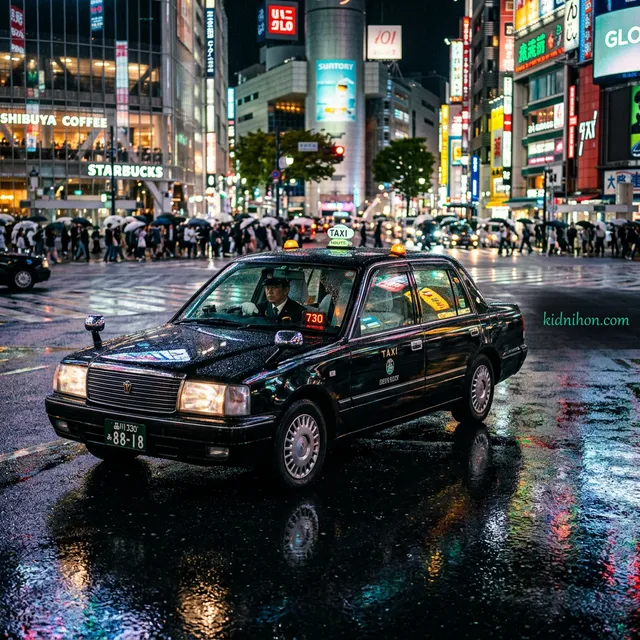
Even though the Japanese Train (電車 - Densha) and Bus (バス - Basu) infrastructure holds the undisputed global crown for mind-boggling punctuality and immaculate cleanliness, you inevitably encounter scenarios demanding four-wheel motorized salvation.
Imagine missing the infamous "Last Train" (終電 - Shuuden) after aggressive company drinking parties, dragging heavy luggage through pouring rain toward a remote Kyoto Airbnb, or navigating rural districts where the next scheduled bus doesn't arrive until tomorrow. In these moments, hailing a Taxi (タクシー - Takushii) remains your singular lifeline.
However, summoning a taxi in Japan isn't synonymous with a cheap, casual Grab or Lyft trip back home. Japanese taxi fares are heavily premiumized, strictly regulated regarding pick-up zones, and layered in rigid social behavioral codes that travelers often dangerously flout.
In 2026, exactly which Ride-Hailing applications dominate the archipelago? Has local Ride-Sharing evolved safely? Dive into the ultimate survival blueprint for foreigners relying on taxis.

1. Deconstructing the Massive Japanese Taxi Fare Structure
Erase the concept of "cheap transport" from your mind. Do not assume taxi expenditures solely revolve around total Kilometers completed. Inside globally vibrant metropolises like Tokyo, Osaka, or Kobe, expenses are ruthlessly extracted via highly calibrated meters:
- Flag Drop Base Rate (初乗り運賃 - Hatsunori unchin): The initial pulse. Sitting down practically docks you roughly 500 JPY purely covering the opening 1,096 meters.
- Rapid Meter Additions (加算運賃 - Kasan unchin): Pushing past the threshold? Every subsequent 255 meters forces the terrifying digital meter to snap upward by 100 JPY. Additionally, this meter incorporates a "time-distance penalty"—meaning idling at endless red lights or stalling in traffic jams routinely injects 100 JPY per 85 seconds.
- Immediate Dispatch Fees (迎車料金 - Geisha ryokin): Pressing roughly two buttons inside the Uber or GO application calls the vehicle to your literal GPS pin, automatically stapling a 300 - 500 JPY "Pick-up" markup directly against your receipt.
- The Late-Night Surge (深夜割増 - Shin'ya warimashi): True fear unlocks between 22:00 PM stretching endlessly until 05:00 AM. Total compiled meter expenses suffer an automatic, non-negotiable 20% surge rate. A 5,000 JPY ride instantly spirals into 6,000 JPY merely for existing in the dark.
Evaluation: Unquestionably, catching a taxi from major airports (Narita or Haneda) piercing into central city districts can easily eclipse several hundred dollars. Countering this immense financial assault, however, is the immaculate, 5-star service. Drivers (運転手 - Untenshu) wield spotless white gloves, cars smell brilliantly of ozone sanitizers, and handlers aggressively lug 30-kilogram suitcases out of trunks unprompted.
2. Definitive Ranking: Top Ride-Hailing Apps in 2026
Do not attempt launching Grab, Bolt, or Lyft inside the Tokyo metropolis. Japan relentlessly curates its isolated internal tech ecosystem to preserve corporate taxi driver stability and suppress private crime variants:
| App Hierarchy | Coverage Dominance (2026) | Staggering Advantages | Optimal Passenger Usage |
|---|---|---|---|
| GO Taxi | Nationwide (The Undisputed King) | Grants massive introductory coupons. | Absolutely mandatory. Download this instantly upon landing. Integrates flawlessly with local credit mapping. |
| DiDi Rider | Kansai Hubs (Osaka epicenter) | Frequently launches aggressive weekend discounts. | Dominates Osaka, Kyoto, and Kansai. Tremendous for budget tourists hunting promotional events. |
| Uber Taxi | Massive Airports & Foreign hubs | Operates directly via your native Uber account. | Ideal for non-residents unable to bridge language barriers, or attempting to order premium VIP Vans. |
3. Disastrous Etiquette Missteps You Must Avoid
Applying casual Western ride-sharing mannerisms upon a strict Japanese cabbie essentially generates visceral irritation and potential police summons:
- Automatic Rear Doors (自動ドア - Jidou Doa): Keep your hands absolutely off! Every authorized taxi's left-rear passenger door operates utilizing high-pressure hydraulic mechanizations manipulated directly via a lever positioned on the driver's console. If you physically seize the handle and desperately yank it shut out of habit, you will severely damage expensive internal joint components. The Rule: Approach the vehicle, stand completely motionless, watch the door swing open magically, board, and watch it close itself. Do NOT touch the door!
- Tipping Drivers (チップ - Chippu): Grossly Insulting. Japan commands a "No-Tip" culture intrinsically woven into service operations. Passing the driver an extra 500 JPY practically suggests they are underpaid vagrants; honorable drivers might literally chase you down dark alleys to return your loose coins. Accept your precise change politely, bow, say "Arigatou gozaimasu," and depart gracefully.
- Illegal Hail Zones: Japanese regulations vehemently prohibit taxis from stalling and receiving passengers upon active pedestrian crosswalks, complicated intersections, or strictly designated Bus Terminals. Stand safely on a quiet curb, or seek an official Taxi Stand (タクシー乗り場 - Takushii Noriba).
4. Have Civilian Ride-Shares Prevailed in Japan?
Throughout 2024 and bleeding into 2026, restricted "Ride-Share" testing—allowing random civilians driving white license plate personal cars to ferry passengers—attempted expansion. However, legislative protectionism meant this system only triggers during hyper-specific gridlocks, explicitly funnels directly through GO parameters, and mathematically clones the sky-high traditional taxi meter rates. Subsequently, the glorious era of ultra-cheap civilian ride-sharing has undeniably failed to overtake the traditional taxi monopolies.
Related Articles
- Japan IC Cards 2026: Suica, Pasmo, ICOCA — The Complete Guide for Foreigners
- Japan Transportation in 2026: Suica Mobile, Shinkansen Private Rooms & New GRAN Tenku Train
- Choosing a Neighborhood in Tokyo 2026: Ward-by-Ward Guide for Foreigners
- 2026 Warning: PR Application Fee Cap to Increase to 300,000 JPY
- Complete Guide to Japan Visa Types 2026: Work, HSP, Student, Spouse & Tourist Visas
Frequently Asked Questions (FAQ)
Q1: Without applications, how do I visually identify if a roaming taxi is available to be hailed? A: Stare directly at the glowing LED dashboard positioned upon the passenger window. If it screams vivid Red spelling 空車 (Kuusha - Empty), launch your hand into the air immediately. Paradoxically, if the display manifests neon Green spelling 賃走 (Chinso - Occupied), the vehicle is currently executing a contract and will zoom violently past your desperate waving. "Red Means Ride, Green Means Gone."
Q2: Will local drivers speak or understand basic English? A: Assume an aggressive 95% "No." Chauffeurs average high seniority ages and predominantly command singular languages. Do not panic! Maximize the brightness on your smartphone, load Google Maps, zoom intensely onto your target building or train station highlighting Romaji lettering, point your finger onto the screen, and smile politely toward the driver.
Q3: Is the taxi infrastructure purely a Cash-only society? A: Practically all urban taxis (Tokyo, Kyoto, Fukuoka) accept immediate Card taps natively—from traditional Visa/Mastercards directly down to Suica cards and Apple Pay arrays. Nevertheless, deploying deep into snow-heavy Hokkaido or rural Japanese prefectures necessitates hoarding a stark minimum of 5,000 JPY physical Cash safely packed inside your wallet to prevent disaster.
Q4: Do I legally have to wear seatbelts in the backseat row? A: Yes, universally. Japanese Highway Laws strictly formulate that rear-seat companions (後部座席 - Kobu zaseki) fasten seatbelts immediately upon entry. Refusing triggers high-decibel annoying mechanical alarms embedded into modern vehicles, distracting the driver, and provoking heavy point deductions directly off the driver's license should police spot you.
✍️ This article was meticulously researched and orchestrated by the verification personnel at the KidNihon Expert Operations Team. Direct all situational questions concerning 2026 legal adaptations into the comments channel beneath!
Key Takeaways
Always update the latest information from official sources.
Join the community for support when needed.